 MuscleOnGLP
Home/Guides/The Muscle-on-GLP-1 Workbook
The research on keeping muscle, turned into something you can work through
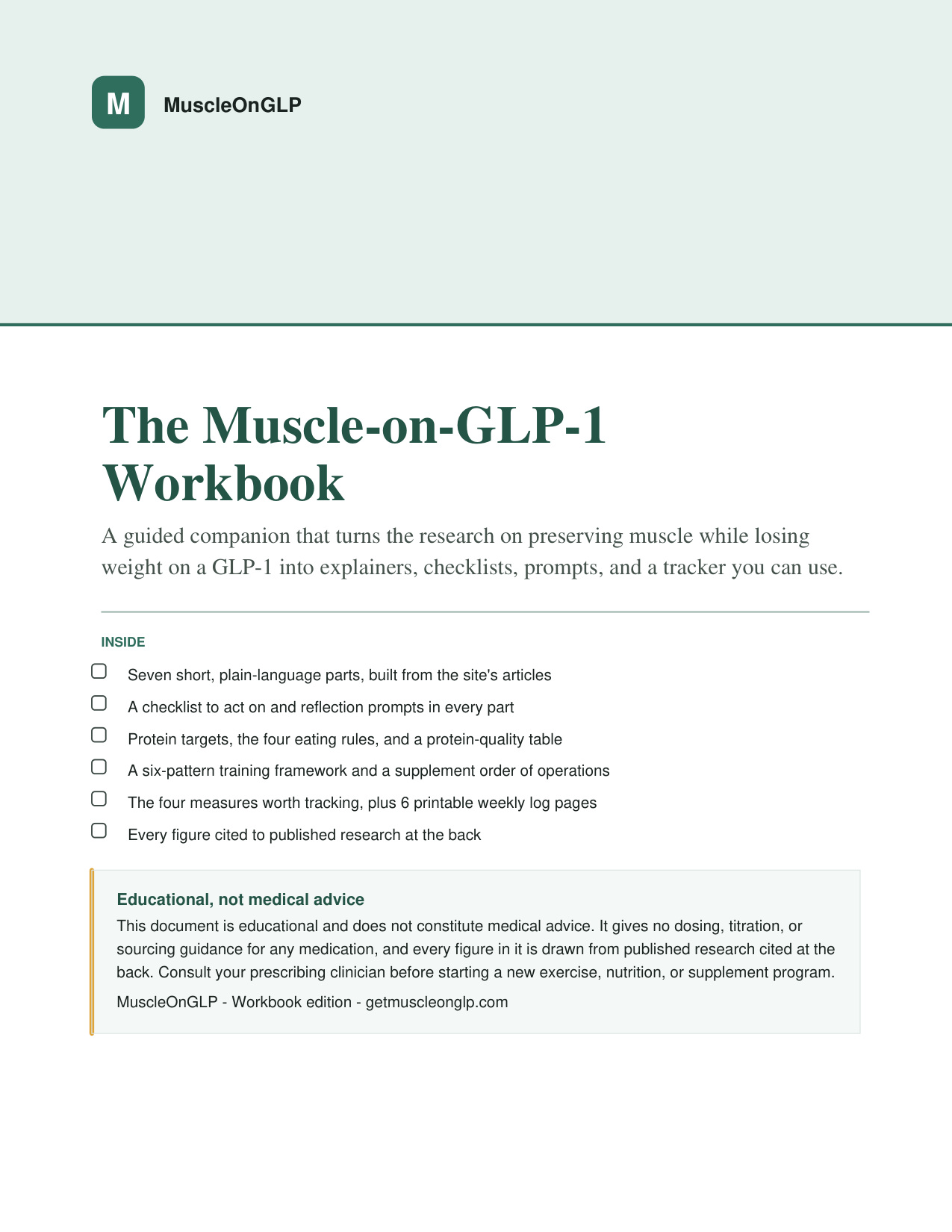
Seven short, plain-language parts, a checklist and reflection prompts in each, and the printable tracker built in. The higher-value tier, and every figure is cited.
Secure checkout. Clicking Buy asks you to confirm the Terms of Service and medical disclaimer before payment.
What is inside
- Part 1 — Why muscle matters on a GLP-1: what the trials show, and the two levers you control
- Part 2 — Your protein target: the numbers, the four eating rules, and a protein-quality table
- Part 3 — Training that protects muscle: six movement patterns, effort, and progression
- Part 4 — Creatine and supplements, in order: the safety evidence and the scale bump to expect
- Part 5 — Reading the signs, tracking strength: the home signal that matters, and when to see a clinician
- Part 6 — Planning the off-ramp: what the data shows about regain, and the two levers to hold steady
- Part 7 — The tracker, built in: a baseline snapshot and six printable weekly log pages
- A quick-reference page of the key figures, and full citations at the back
What the evidence says
- Reviews place lean mass at roughly 15 to 40 percent of the weight lost on a GLP-1, and about 26 percent in the best-measured tirzepatide trial.
- Adding resistance training offset about 93.5 percent of diet-induced lean-mass loss in a meta-analysis of older adults.
- Only about 43 percent of GLP-1 users met even a modest protein minimum in a cross-sectional study.
Every substantive claim in the workbook is drawn from the same peer-reviewed research cited in our free articles, with the sources listed at the back. Where the evidence is extrapolated from broader weight-loss or older-adult populations rather than measured in GLP-1 users specifically, the workbook says so.
Frequently asked
What is in the Muscle-on-GLP-1 Workbook?
Twenty pages in seven short parts: why muscle matters on a GLP-1, your protein target and the four eating rules, training that protects muscle, creatine and supplements in order, reading the signs and tracking strength, planning the off-ramp, and a printable tracker. Each part has a checklist to act on and a reflection prompt or two, and the tracker section includes a baseline snapshot and six weekly log pages. Every figure is cited.
How is the Workbook different from the Tracker?
The Tracker ($9) is the printable weekly log on its own. The Workbook ($19) is the higher-value tier: it wraps the same tracker pages in the explainers, checklists, and reflection prompts that tell you what to track and why, drawn from the site's articles. If you want the log alone, buy the Tracker; if you want the full guided companion with the log built in, buy the Workbook.
Is the Workbook medical advice or a diet plan?
No. It is strictly educational and descriptive, not a prescription. It contains no diet plans, no dosing or titration guidance, and no appearance or transformation framing. It explains what published research shows about protein and resistance training during weight loss and leaves the decisions to you and your clinician. It carries a visible "educational, not medical advice" disclaimer.
Prefer to read the evidence first? How much protein do you actually need on a GLP-1? is one of the free, fully-cited explainers the workbook is built from.
The Muscle-on-GLP-1 Workbook
20 pages. Nineteen dollars. The guided tier, with the tracker built in.
Purchases are subject to our Terms of Service and medical disclaimer.
Just want the log? The Muscle-on-GLP-1 Tracker is the printable weekly pages on their own for $9.